| MALAYSIA |
| Hongkong | Macau | Singapore | Indonesia |
| Malaysia | Thailand | Vietnam | Cambodia |
 |
|
 |
|
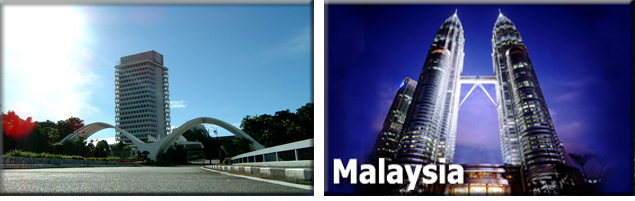
| Malaysia is a federal constitutional elective monarchy. The federal head of state of Malaysia is the Yang di-Pertuan Agong, commonly referred to as the King of Malaysia. | (2N 3D) US $480
|
| The Yang di-Pertuan Agong is elected to a five-year term among the nine hereditary Sultans of the Malay states; the other four states, which have titular Governors, do not participate in the selection.
The system of government in Malaysia is closely modelled on that of the Westminster parliamentary system, a legacy of British colonial rule. Since independence in 1957, Malaysia has been governed by a multi-party coalition known as the Barisan Nasional (formerly known as the Alliance Party). Legislative power is divided between federal and state legislatures. The bicameral parliament consists of the lower house, the House of Representatives or Dewan Rakyat (literally the "Chamber of the People")and the upper house, the Senate or Dewan Negara (literally the "Chamber of the Nation"). |
|
 |
|
|
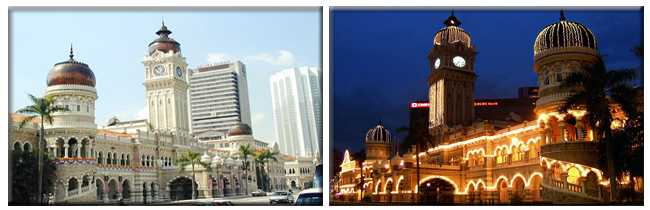
Sultan Abdul Samad Building in Kuala Lumpur houses the High Court of Malaya and the Trade Court. Kuala Lumpur was the capital of the Federated Malay States and is the current Malaysian capital.
During the late 19th century, many Malay states decided to obtain British help in settling their internal conflicts. The commercial importance of tin mining in the Malay states to merchants in the Straits Settlements led to British government intervention in the tin-producing states in the Malay Peninsula. British gunboat diplomacy was employed to bring about a peaceful resolution to civil disturbances caused by Chinese and Malay gangsters employed in a political tussle between Ngah Ibrahim and Raja Muda Abdullah. |
|